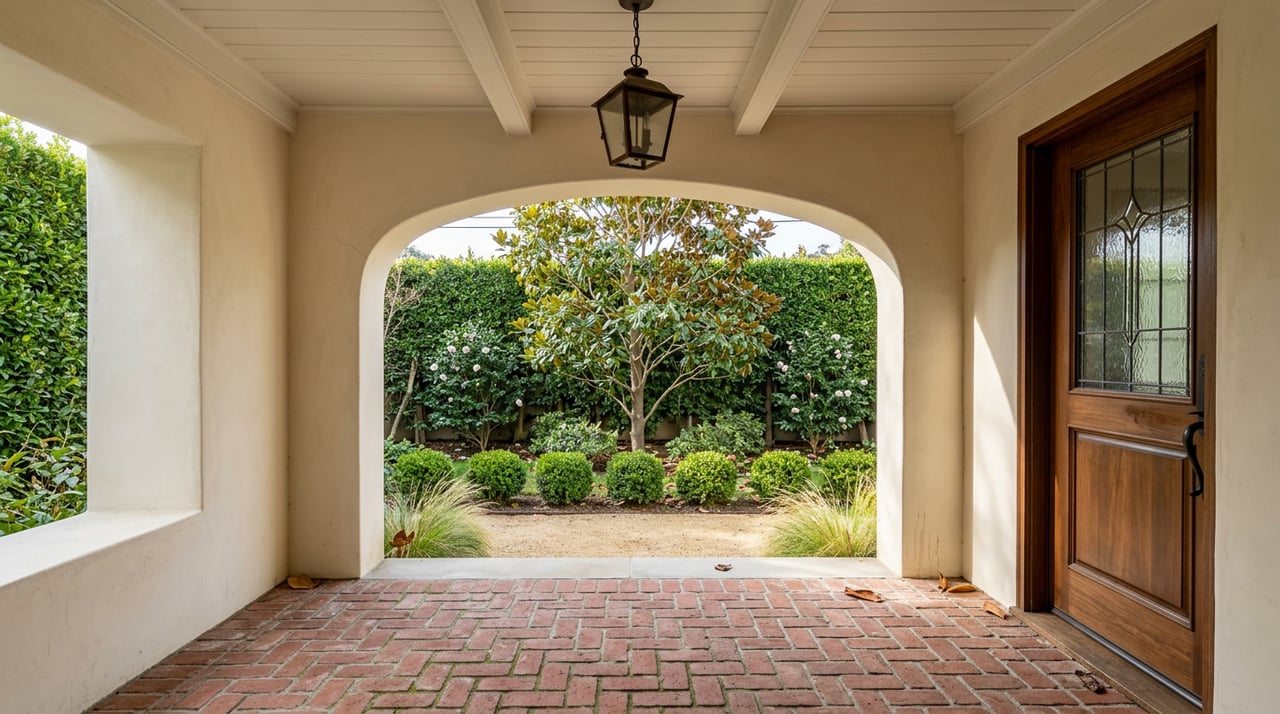
Selling in the Hancock Park HPOZ: The Prep Decisions That Actually Move a Sale
July 23, 2026
July 23, 2026
Most sellers in Hancock Park hear "historic overlay" and picture a rulebook that slows their remodel. The more useful framing, at least once you've decided to list, is that the Historic Preservation Overlay Zone is a pricing mechanism. It quietly moves exterior-work risk from the buyer's side of the transaction to the seller's. The homes that hold price in this neighborhood aren't the ones with the newest kitchens. They are the ones whose sellers have already answered the questions a buyer's attorney would otherwise raise in escrow.
That is the thesis worth carrying through your prep. Almost every stat, every review timeline, every material choice below is downstream of it.
A Hancock Park buyer paying anywhere from the low seven figures into the mid eights is usually not buying blind. Their agent will ask, sometimes before the first showing and almost always during the inspection window, for two things that have nothing to do with square footage: the property's contributing or non-contributing designation in the HPOZ inventory, and any past Certificate of Appropriateness approvals or open items in its permit history.
Contributing status matters because it changes the depth of review on any future exterior work. A general contractor writing about local practice notes that contributing properties face stricter scrutiny, with retention and repair of original windows and doors preferred over replacement, and that visible vinyl products are often discouraged where they change the appearance. That is not trivia. It is a live constraint on the buyer's renovation plans, and buyers who cannot answer it themselves will discount to protect against it.
The friction that catches sellers off guard is that this paperwork lives in more than one place. HPOZ approvals are handled through Los Angeles City Planning and the Hancock Park HPOZ Board. Building permits are issued separately by the Los Angeles Department of Building and Safety once HPOZ sign-off is in hand. If the last owner added a rear addition, redid the front fence, or replaced a garage door, there may be a paper trail on one side and a gap on the other. Pull both records before you list. If something was done without approval, you want to know before the buyer's team finds it.
Hancock Park's headline numbers in 2026 look contradictory because the sample is small and the property mix is wide. A useful snapshot of the recent range:
| Source and month | Median | Price per sq ft | Days on market |
|---|---|---|---|
| Douglas Elliman, Hancock Park–Wilshire, January 2026 | $1.875M | $785 | reported alongside 86 for sale, 9 pending |
| Redfin, Hancock Park, January 2026 | $1.925M | not reported | 48, on seven closings |
| Redfin, Hancock Park, February 2026 | ~$4.26M | ~$748 | 110 |
| Redfin, Hancock Park, March 2026 | $1,067,500 | $748 | 136 |
| Realtor.com, current listings | $1.50M list | $841 | active inventory around 23 |
The February 2026 median moving to roughly $4.26 million and then back below $1.1 million in March is the kind of swing you get when a single trophy sale closes in a neighborhood where inventory sits between roughly 20 and 90 units at any given time. For a seller, the practical read is that monthly medians are directional at best. Sale-to-list ratios, which have been running near 98 percent across multiple sources, and the price-per-square-foot band of roughly $748 to $841, are steadier tools for setting a list price than any single month's median.
The deeper point is that Hancock Park behaves like a low-turnover, legacy-hold market. When a home does trade, the buyer is often paying for architectural pedigree and a protected streetscape as much as for the interior. That premium is what the HPOZ is protecting on your behalf. It also raises the bar on how the exterior presents on the day the listing goes live.
Not every improvement is worth doing before you list. Inside the HPOZ, three carry more weight than they would in a non-historic block:
Interior work sits in a different category. Interior scope that does not touch the exterior generally falls outside HPOZ review, which is why kitchen and bath updates remain the highest-leverage cosmetic spend in the neighborhood. Compass Concierge, which fronts staging and cosmetic prep repaid at closing, is a reasonable fit for that scope, and one worth discussing early with your agent through Sonya's concierge overview.
A few specifics worth naming because they trip up sellers who are used to non-historic neighborhoods.
Paint color on a street-visible facade is not a free choice. It is a reviewable exterior change under the Preservation Plan, and while a like-for-like refresh is often handled at staff level, a shift to a color that is out of character with the block can require formal review. If you are considering a fresh coat as part of listing prep, choose historically appropriate tones, or plan for a short lead time on approval.
Corner lots deserve extra attention. Larchmont Buzz has noted that HPOZ review covers side facades visible from the street, that visibility is determined by the City Planner from the sidewalk, and that hedges and trees do not shield a side elevation from being counted as visible. If you own a corner property and have been treating the side wall as private, your buyer's architect will not.
The 60 percent live-plant recommendation is worth honoring even if the front yard is technically compliant already. Buyers touring in 2026 read water use into a landscape almost immediately. A yard that looks correct for both the era and the climate does more for showings than any staging table.
The review calendar rewards sellers who plan backward from a list date rather than forward from an idea. Local practitioners describe minor exterior projects clearing staff review within a few weeks, while anything requiring a board hearing typically runs several months, partly because Hancock Park HPOZ Board meetings operate under Brown Act notice rules. A public notice from LA City Planning confirms that adjacent neighbors must receive written notice at least ten days before a board hearing on a Certificate of Appropriateness, and the site itself must be posted for the same window.
A useful rule of thumb: if the exterior work you are considering would need a public hearing, do it before you list or wait until after you close. Trying to compress that timeline into an active listing window almost always costs more, in carrying cost and in buyer confidence, than the improvement returns.
For sellers over 55, Proposition 19 base-year transfer timing is a separate calendar to lay next to your listing plan. It does not touch the HPOZ process, but it does shape whether you sell first or buy first, and that decision often changes what pre-listing work is worth doing at all.
Does HPOZ status hurt or help resale?
The same rules that slow an owner's remodel also block a neighbor from building something out of scale next door. Local practitioners tracking resale trends describe Hancock Park as holding steady on that basis. Buyers thinking in decades tend to read the protection as part of the value, not against it.
Do I need HPOZ approval for interior work I'm doing before listing?
Interior-only work that does not affect the exterior normally falls outside HPOZ review. Confirm scope in writing before demolition begins, especially if the work touches windows, doors, or anything that will be visible from the street once finished.
What if a past owner did unpermitted exterior work?
Address it before listing when you can. The Office of Historic Resources can help identify what is on record, and a preservation-experienced architect can advise on whether the work can be resolved through a Certificate of Appropriateness after the fact or should be disclosed as-is with a price adjustment built in.
Is the Metro D Line extension changing buyer profiles?
Section 1 of the D Line Extension opened on May 8, 2026, with Wilshire/La Brea and Wilshire/Fairfax stations now serving the Hancock Park area. It has widened the pool of buyers who value central access without a car, which shows up most in the mid-market condo and townhouse tiers rather than in the estate segment.
If you own a Hancock Park home and are thinking about a 2026 or early 2027 listing, the highest-return conversation to have right now is not about staging. It is about what your property's HPOZ file already says, what it doesn't, and how to close that gap before a buyer's inspection does. Sonya Chun works through that preparation, including a private home valuation that factors in contributing status and permit history rather than square footage alone. Let's connect when you're ready to plan.
Stay up to date on the latest real estate trends.
Get assistance in determining the current property value, crafting a competitive offer, writing and negotiating a contract, and much more. Contact me today.
Get in Touch to Learn More

Sonya Chun | CA DRE# 01049465
6430 W Sunset Blvd Ste 600 Los Angeles, CA 90028