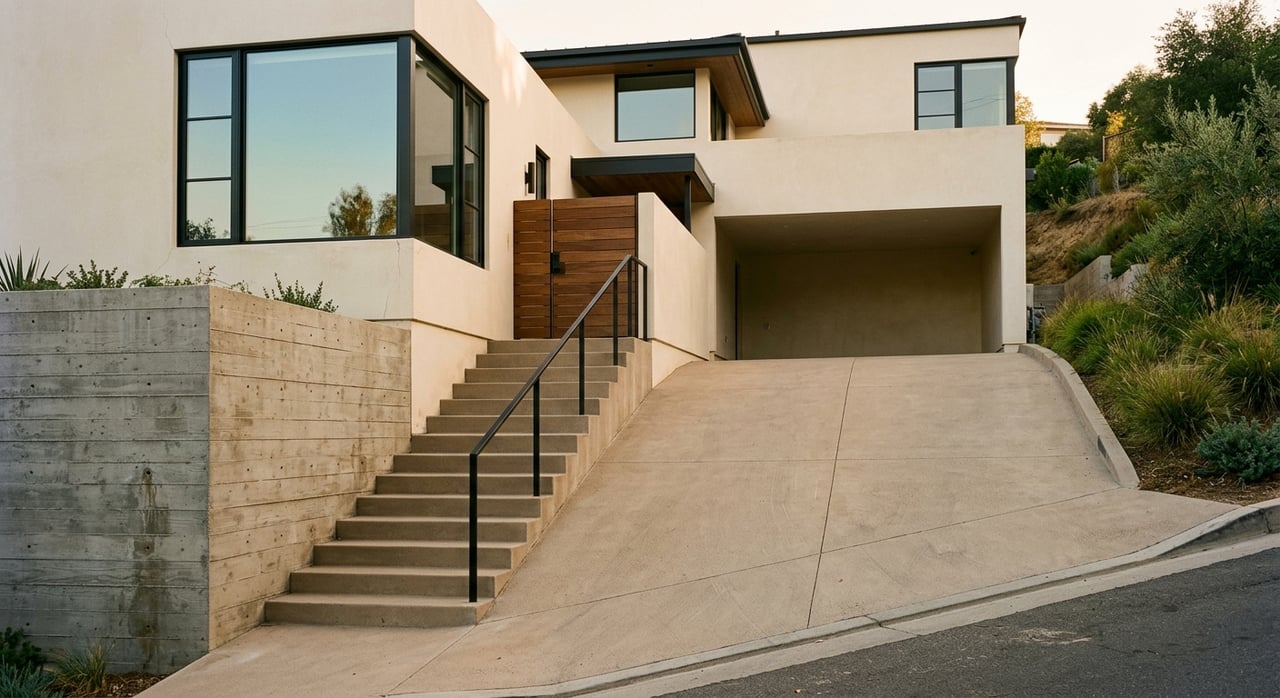
What to Know About Buying a Hillside Home in Silver Lake
June 25, 2026
June 25, 2026
If you are drawn to Silver Lake hillside homes, you are probably thinking about more than square footage. You may be picturing reservoir views, classic stair streets, strong architecture, and that distinct feeling of living above the city. The appeal is real, but so are the extra layers of access, site conditions, and permitting that come with buying on a slope. If you know what to look for, you can evaluate these homes with much more confidence. Let’s dive in.
Silver Lake is not a flat-grid neighborhood where one house works much like the next. City planning documents describe this area as a place of dense hillside neighborhoods, steep slopes, narrow streets, and a notable concentration of Modernist-era homes near the Silver Lake Reservoir. The community plan also notes that the area has more open space than many comparable parts of the Los Angeles metro area.
That setting is a big part of why buyers love it. It also means a hillside purchase is often shaped by topography just as much as design. In Silver Lake, the way you reach the home, move around the lot, and use the outdoor space can matter as much as the floor plan itself.
Council District 4 also points to the neighborhood’s historic staircases and hillside pedestrian routes. In daily life, that can translate into a very different living experience from one property to another, even if two homes are only blocks apart. A home may feel magical on a first tour, but the real question is whether the access and layout fit your routine.
In a hillside neighborhood, access is not just a convenience issue. It can affect daily ease, guest parking, deliveries, and emergency access. That is why it deserves close attention during your home search.
The Los Angeles Fire Department evaluates access using factors such as street and fire-lane width, turnarounds, turning radii, grade access points, parking restrictions, overhead clearances, load capacity, and secured entrances. LAFD also states that gates cannot reduce required roadway width below 20 feet free and clear.
The City’s hillside rules add another important point. If a new one-family dwelling or addition does not have a vehicular access route from a street improved with a minimum 20-foot continuous paved roadway, the project may need to meet hillside access requirements or obtain special approval. Lots on substandard hillside limited streets may also trigger street dedication requirements.
For you as a buyer, the practical step is simple: test the approach in person. Do not just admire the view from the living room. Drive the route, make the turn into the driveway, check the gate if there is one, and picture what it feels like after dark or in rain.
A beautiful hillside home can lose some of its shine if getting in and out feels stressful every day. In Silver Lake, ease of access is part of the value equation.
A hillside lot can look generous on paper but function very differently in real life. With sloped sites, the key question is not just lot size. It is how much of that space is actually usable.
That is why grading, drainage, and retaining walls are such important parts of due diligence. The Los Angeles Department of Building and Safety says grading plan checks are required before permits for work such as slope repairs, landslide repairs, tract grading, mass grading, site preparation, removal and recompaction for building pads, basement excavations, pool excavations in hillside areas, and retaining wall cuts, backcuts, and backfill. LADBS also says soils and geology reports are typically submitted with those plans.
This matters because outdoor improvements on a hillside site often involve more than simple landscaping. A terrace, pool, expanded patio, or retaining wall may connect to a deeper layer of engineering and review. If you are buying with future upgrades in mind, it helps to understand that early.
When you tour a Silver Lake hillside property, pay attention to:
These details shape how the property lives day to day. A dramatic lot can still be a great fit, but it should match how you want to use the home.
Water management is one of the most important behind-the-scenes issues in hillside ownership. It may not be glamorous, but it affects maintenance, improvements, and long-term performance.
LADBS guidance says roof drainage from new construction and site drainage from graded pads should go to the street, a natural watercourse, or an approved drainage facility. If construction changes drainage across a property line, a drainage easement and a recorded covenant or agreement may be required.
That means drainage patterns are not something to gloss over. If a property has been altered over time, or if previous work changed where water goes, you want to know that before closing. This is especially true if the lot has extensive hardscape, retaining walls, or visible signs of previous grading.
In a hillside home, good drainage planning is part of sound ownership. It is not just a technical detail.
Retaining walls are common in hillside neighborhoods, but not all walls are equal. Some are decorative landscape features, while others are tied directly to slope stability, grading, and site support.
City engineering guidance notes that hillside retaining walls can require additional review. It also states that if the roadway fronting the property is less than 20 feet wide, an owner may be required to widen or improve it to at least 20 feet as part of the permit process. City zoning materials also show that retaining walls in hillside areas may require conditional-use review when they exceed height limits.
For buyers, this means any future project involving walls, terraces, or significant outdoor changes should be viewed carefully. If your vision for the property includes reshaping the yard or building new outdoor features, make sure you understand what may be involved.
In Silver Lake, many hillside homes have had years, or decades, of updates. Some may have additions, rebuilt decks, retaining wall work, drainage changes, or basement excavation. That is why permit history matters.
LADBS says its property records can provide documents related to construction, permitting, inspections, and code enforcement. That makes permit history a valuable part of buyer due diligence, especially for hillside properties where access, grading, and structural work often overlap.
LADBS also explains that construction moves through inspection stages such as excavation, foundation, framing, roofing, exterior finishing, and waterproofing, with each stage requiring approval before work is covered. Larger jobs can also require continuous inspection by certified Deputy Inspectors.
Before you close, it is wise to review whether major work appears to have been properly permitted and finalized, especially for:
This does not mean every older home will have a perfect paper trail. It does mean you should understand what was done, what was approved, and what questions remain.
Many buyers are open to a home that needs some updating, especially in Silver Lake where character and location often lead the decision. But on a hillside lot, future projects can involve more review than buyers expect.
Based on LADBS guidance, hillside work can surface grading, structural, fire-access, and engineering issues during permitting. Projects may also involve more than one city department depending on the scope.
So if you are buying a home with plans for an addition, a pool, expanded outdoor space, or major renovation, it is worth looking at the property through that lens from the beginning. A home can still be a great opportunity, but the path from idea to permit may be more layered than it would be on a flatter lot.
Hillside living also comes with ongoing maintenance responsibilities tied to fire readiness. LAFD states that hillside communities are under continuous threat of wildfire and includes defensible space as part of readiness.
In the Very High Fire Hazard Severity Zone, owners must maintain vegetation year-round within 200 feet of structures and within 10 feet of combustible fences or roadways and driveways used for vehicular travel. For buyers, that is part of the ownership picture to understand early, especially if the property has dense landscaping or large hillside planting areas.
This does not make hillside ownership less appealing. It simply means the home should be evaluated not just for beauty, but for upkeep, access, and resilience.
Buying a hillside home in Silver Lake is often about balancing emotion with clear-eyed due diligence. You may fall in love with the architecture, the light, the decks, or the view, and that emotional connection is part of what makes this neighborhood special. The key is making sure the practical side supports the lifestyle you want.
A thoughtful buying process usually includes looking closely at access, parking, drainage, retaining walls, permit history, and future project constraints. When you understand those pieces, you can move forward with more clarity and fewer surprises.
If you are considering a hillside home in Silver Lake, working with someone who knows the neighborhood’s terrain, housing stock, and local nuances can make the process much smoother. If you want a calm, strategic guide, connect with Sonya Chun.
Stay up to date on the latest real estate trends.
Get assistance in determining the current property value, crafting a competitive offer, writing and negotiating a contract, and much more. Contact me today.
Get in Touch to Learn More

Sonya Chun | CA DRE# 01049465
6430 W Sunset Blvd Ste 600 Los Angeles, CA 90028